

The Croatian government has passed key amendments to the Act on the Treatment of Illegally Constructed Buildings, opening a new opportunity for the legalization of structures built before 21 June 2011. This step abolishes the previous deadline of 30 June 2018, allowing for the permanent submission of applications for the legalization of illegally constructed structures. Thousands of owners of houses, garages and holiday homes now have a chance to resolve the status of their properties.
Key changes to the law
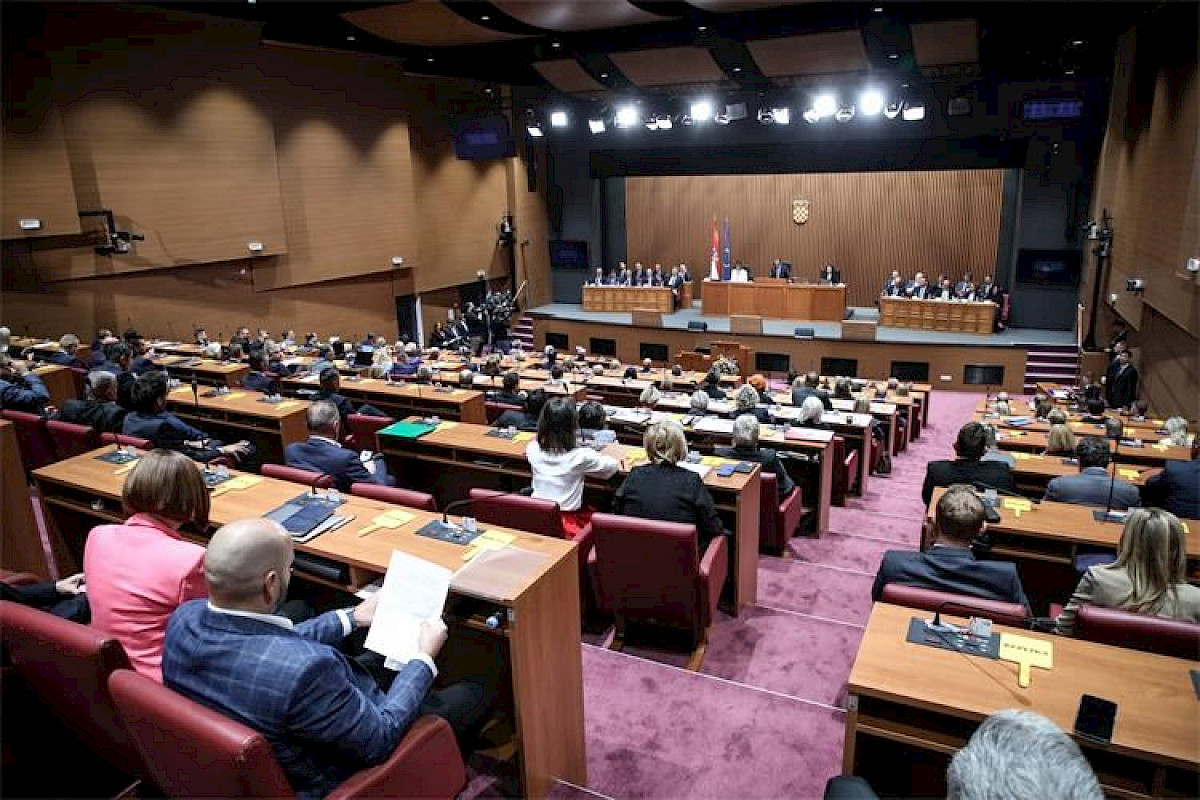
On 30 April 2026, the Parliament adopted amendments to the Act on the Treatment of Illegally Constructed Buildings with 108 votes in favour, confirming that only structures visible on the orthophoto map of the State Geodetic Administration (SGA) of 21 June 2011 will be legalized. Legalization is prohibited on infrastructure corridors, maritime property, protected areas, state land or archaeological sites. The fee for illegal construction will increase due to the passage of time, depending on the size, location and purpose of the structure, and will be prescribed by a special regulation.
The procedure is becoming digital: applications are submitted via the eDozvola or ISPU system, with mandatory confirmation by the SGU in GML format. Before registering in the cadastre, property-legal relations are resolved, including resubmitting rejected applications.
Who can apply?
Legalization applies to buildings built between February 15, 1968 and June 21, 2011, without a building permit, if they are visible on the DOF5/2011 orthophotos. Newer buildings are excluded, in order to prevent future illegal construction, for which the penalties have been increased.
If you missed the previous legalization from 2012, this is your chance to correct that mistake. The Agency for Legalization of Illegally Constructed Buildings continues to monitor the process, but the procedure is managed by local administrative departments of municipalities and cities.
Step by step: How to legalize?
1. Check the conditions: Confirm visibility on the SGU orthophotos and exclusion from prohibited zones.
2. Prepare the documentation: As-built image (architectural project), geodetic study if necessary, proof of ownership.
3. Submit the application digitally via eDozvol, paying the fee, utility and water contributions.
4. Wait for the decision: The inspector checks, a decision on the as-built status is issued.
5. Record in the cadastre and land registers for full legal power.
The costs include a fee (higher than in 2012), contributions and expert services. Use online calculators for an estimate. Companies like RESIDENT Nekretnine offer support in preparing the documentation, speeding up the entire process.
Advantages of legalization
A property without a Use Permit / Decision on the As-Built Status on the market achieves a lower price than a legal property. Likewise, banks have tightened the criteria and it is impossible to buy a property through a bank loan if the property does not have a Use Permit / Decision on the As-Built Status.
RESIDENT Nekretnine points out that legalization unlocks investments and that everyone benefits from legalization: real estate sellers/owners because they will achieve a higher price, the real estate market because new legal real estate will appear that will be easier to sell, and the local community and the state from collecting utility fees or real estate sales tax when the legalized real estate is sold. Without legalization, real estate remains uninteresting on the market.
Conclusion
Legalization in 2026 brings a new opportunity to the owners of illegal facilities, but it requires action. Do not miss this opportunity and feel free to contact us for advice, we will be happy to help.
Your RESIDENT team