

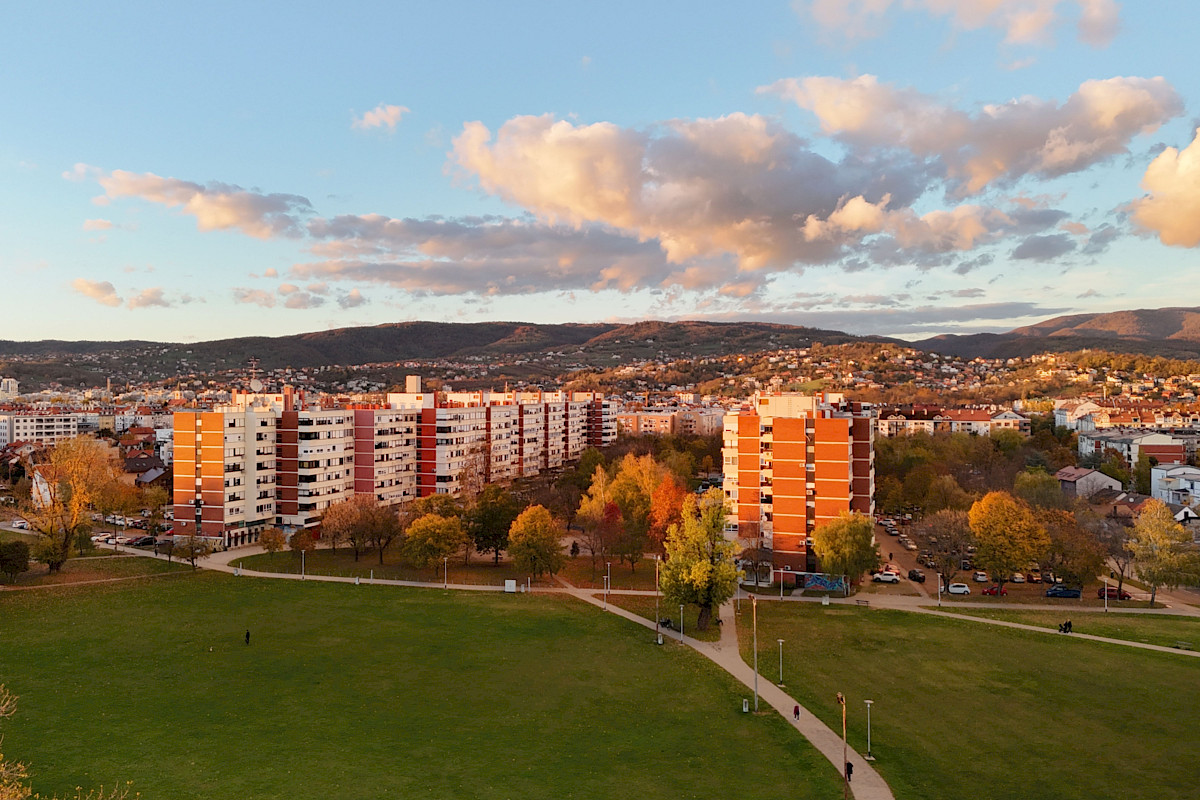
Špansko, located in the western part of Zagreb, is one of those settlements that perfectly combines a rich historical tradition with a modern, urban life that is today attractive to numerous families and young people. Administratively belonging to the city district of Stenjevec, this neighborhood offers a recognizable identity that extends from historical roots to modern housing construction that has shaped its current appearance.
History and origin of the name
The history of Špansko goes back far into the past, and the very origin of its name still causes interesting discussions among historians and locals. The most common and historically most likely theory connects the name with the word "špan", which was a title for the managers of feudal or episcopal estates. Given that this area once belonged to the Zagreb Kaptol, the land was under the administration of the Špan of the Zagreb bishop, and the population was largely serfs throughout the centuries, until the abolition of serfdom in 1848.
Another, more intriguing, although less frequently confirmed theory, suggests that the name originates from the 16th century, from the time when the Habsburg rulers brought Spanish mercenaries to these areas to participate in the conflicts of the time. The military camps of these mercenaries were allegedly located in the area of today's settlement, which was then located right next to the Sava River. Interestingly, at the end of the 19th century, numerous families began to move into the then-established settlement, among which those of Bulgarian origin stood out, such as the Kokošarov and Teskov families, which further enriched the demographic structure of the neighborhood.
The Quarter of Poets and Writers
One of the most recognizable characteristics of Španski is certainly its urban topography, due to which the neighborhood is also known in the public as the "Quarter of Poets and Writers". Namely, numerous streets in the settlement bear the names of great figures of Croatian literature and poetry, which created a kind of cultural map within the neighborhood itself. A walk through Špansko thus takes you through streets dedicated to great figures such as Dobriša Cesarić, Matthias Flacius Illyricus, Josip Pupačić, Drago Gervais, and recently the tradition of naming streets has continued in the spirit of culture and history, for example by naming a street after Marija Radić, the wife of Stjepan Radić, which further emphasizes the importance of historical figures in the identity of the neighborhood.
Development and spatial organization
Today, Špansko is clearly divided into an “old” and a “new” part, which is the result of intensive urbanization that took place in several stages. While the old part of the neighborhood preserves the memory of bygone times and a more rural past, the 1980s brought a key transformation when Špansko gained its current contours. At that time, a series of large residential buildings were built at great speed, making the neighborhood one of the most important residential areas in western Zagreb.
The new part of the neighborhood, which often intersects with neighboring Malešnica, continues to expand, bringing modern residential buildings and infrastructure adapted to the contemporary needs of residents. Although the boundaries sometimes confuse even the residents themselves, given the proximity of Malešnica and Vrapče, Špansko stands out as a neighborhood that offers a high quality of life, plenty of green spaces and connections to all key city amenities.
Statistics and life in the neighborhood
According to the 2011 census, Špansko had 24,241 inhabitants, which placed it among the larger settlements of Zagreb. Although later censuses record demographic changes at the level of the entire city, Špansko has maintained its status as one of the most sought-after residential neighborhoods due to its functionality. The neighborhood is bordered by important roads such as Zagreb Avenue in the south, while it is surrounded on the other sides by Oranice, Malešnica and Jankomir, which provides excellent connections to the rest of the city.
Over the years, the neighborhood has developed a profile as an exceptionally family-oriented neighborhood with a developed social infrastructure. In addition to numerous schools, kindergartens and sports facilities, an important part of the local identity is also the NK Špansko, founded in 1958, which has been gathering young generations for decades and fostering the sporting spirit of the community. All of the above, along with the spirit of tradition woven into the street names and the historic core, makes Špansko an area that is not just a place to live, but a neighborhood with a soul that is continuously growing and developing together with its residents.
Connectivity and facilities
Špansko also stands out for its excellent transport connections, making everyday life even easier for residents. The neighborhood is well connected by bus lines 136 and 115, and a great advantage is the proximity to the highway entrance, which makes Špansko a practical choice for anyone who often travels outside the city or drives daily to other parts of Zagreb.
On the edges and in the immediate vicinity of the neighborhood are two large shopping centers, CCO West and Z centar, so shopping, services and entertainment are available without having to leave the settlement for a long time. In addition, at the entrance to the neighborhood there is a newly built swimming pool, which further enriches the sports and recreational offer of Španski and makes it even more attractive for families and active residents.
Ivan Kukuljević Square, which is the true center of the settlement, occupies a particularly important place in everyday life. It is there that almost all the essential amenities are located, from shops, bakeries, banks and pharmacies to post offices and cafes, making the square a natural place for locals to meet and gather. It is precisely this combination of functionality and liveliness that gives Špansko the feeling of a well-organized, self-sufficient and pleasant urban neighborhood.
Conclusion
Špansko can rightly be called an ideal place to live today, since its balance of peace, developed infrastructure and rich amenities provides perfect conditions for the growth of young families. At the same time, the neighborhood offers exceptional functionality and a pleasant atmosphere that allows older generations to have a quality everyday life at their fingertips. It is precisely this combination of tradition and modern urbanity that makes Špansko a neighborhood where everyone can feel at home.